
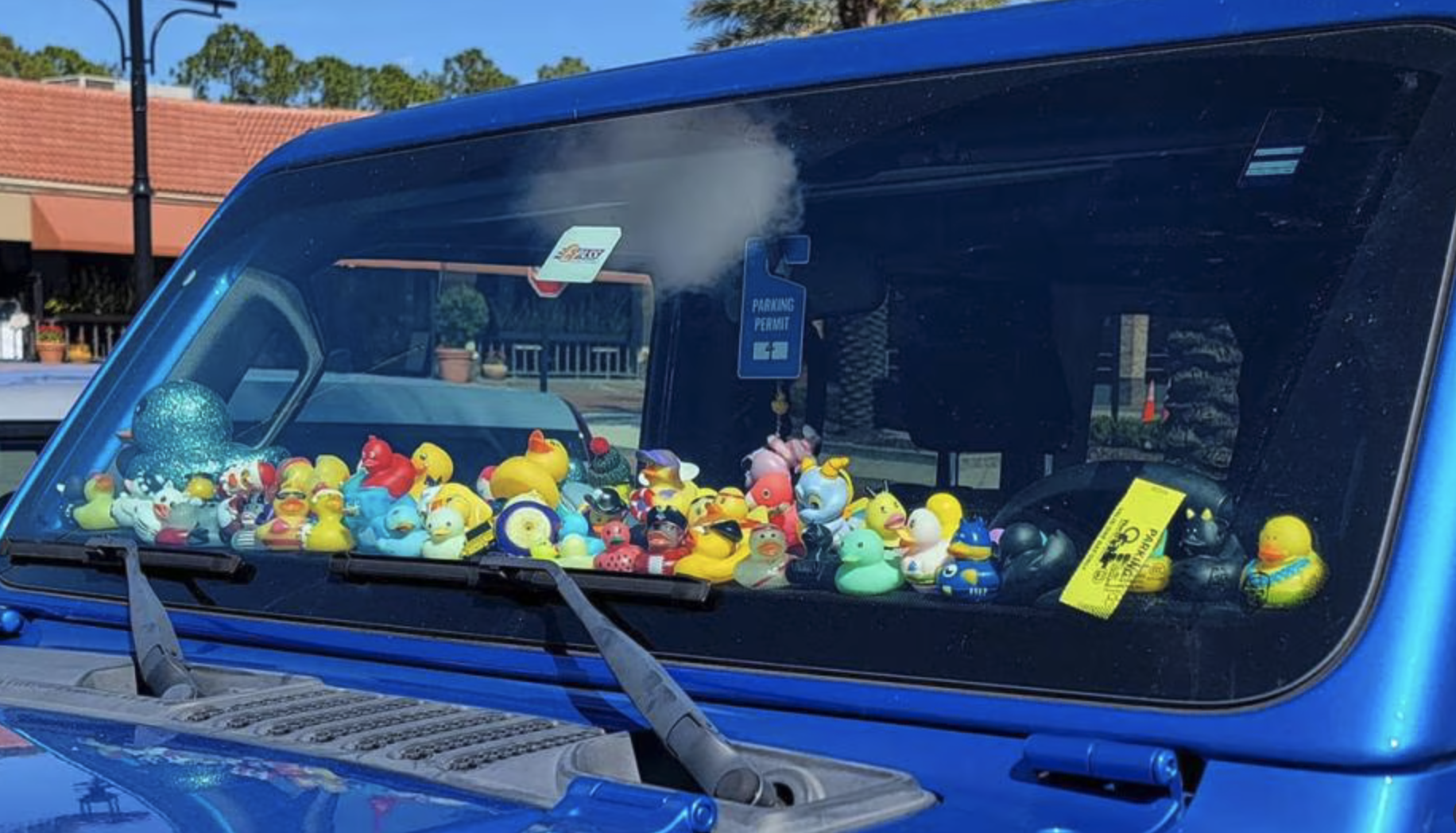
Once upon a time, there was a little duck in Houston.
Since I moved to Houston three years ago, I started noticing some habits that, for someone coming from another country, seem particularly curious. One of them was on car dashboards. More specifically, on Jeep dashboards.
At first, it was just a little yellow rubber duck. Then I started spotting others, with different colors, costumes, and shapes. There were ducks dressed as superheroes, doctors, police officers, pirates, movie characters, soccer players, and everything else one’s imagination or the industry could create. Some cars had just one or two. Others displayed dozens of them, lined up in front of the windshield like a real collection.
Over time, I realized it wasn’t just decoration. There was a sort of informal competition, even though probably no one called it that. Who had the most little ducks? Who had the rarest? Who had received a model that no one else seemed to have?
The bigger and more exclusive the collection, the prouder the owner seemed to be. I have to admit I found it interesting, but didn’t think much more about it. I just accepted the ducks as another one of the many quirks of American culture I was beginning to experience. Until, during a recent trip to Italy, they popped up again.
An entire store of little ducks
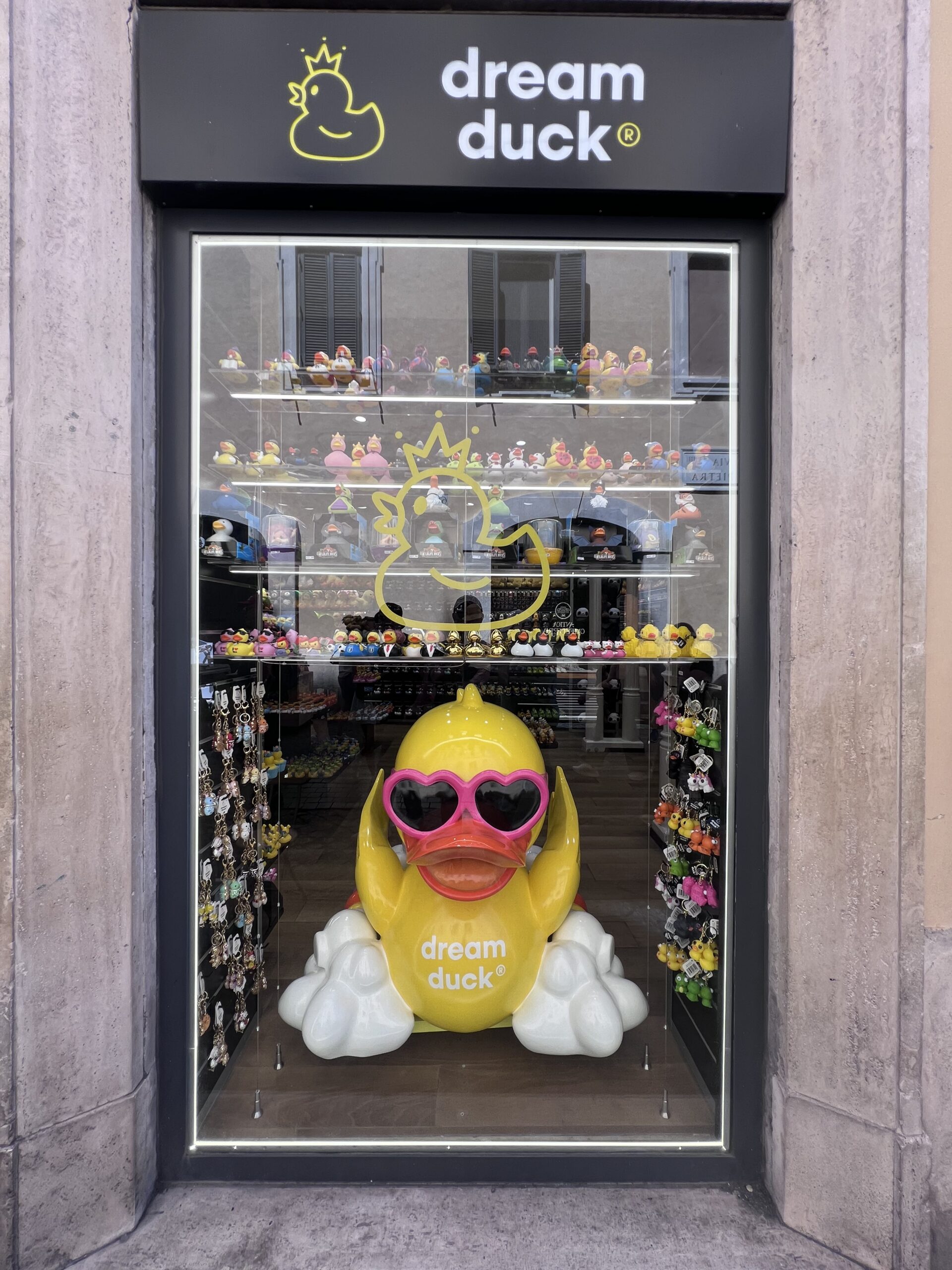
Walking through Rome, among historic buildings, restaurants, clothing stores, religious souvenirs, and all kinds of keepsakes, I came across a shop that sold nothing but rubber ducks.
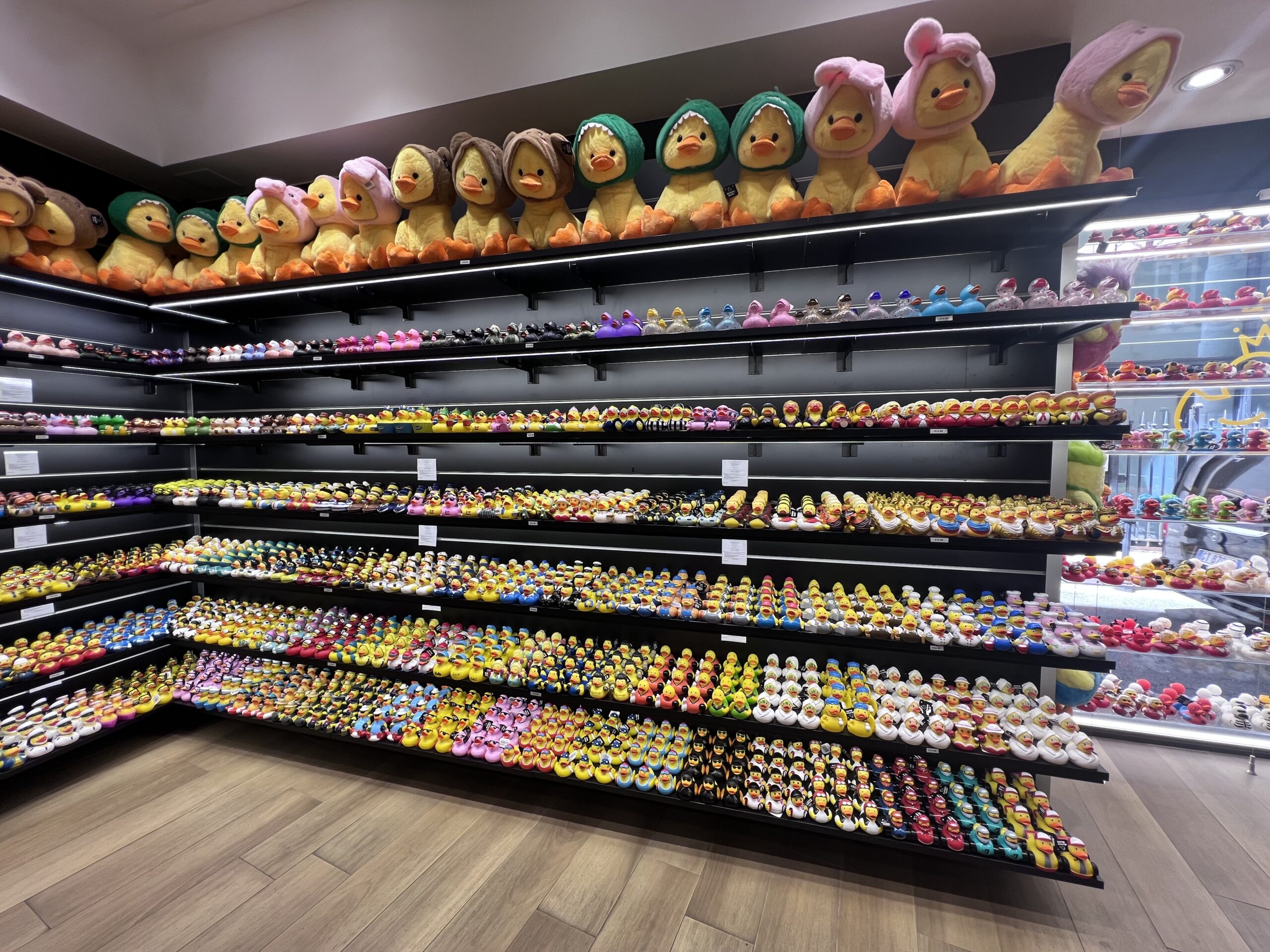
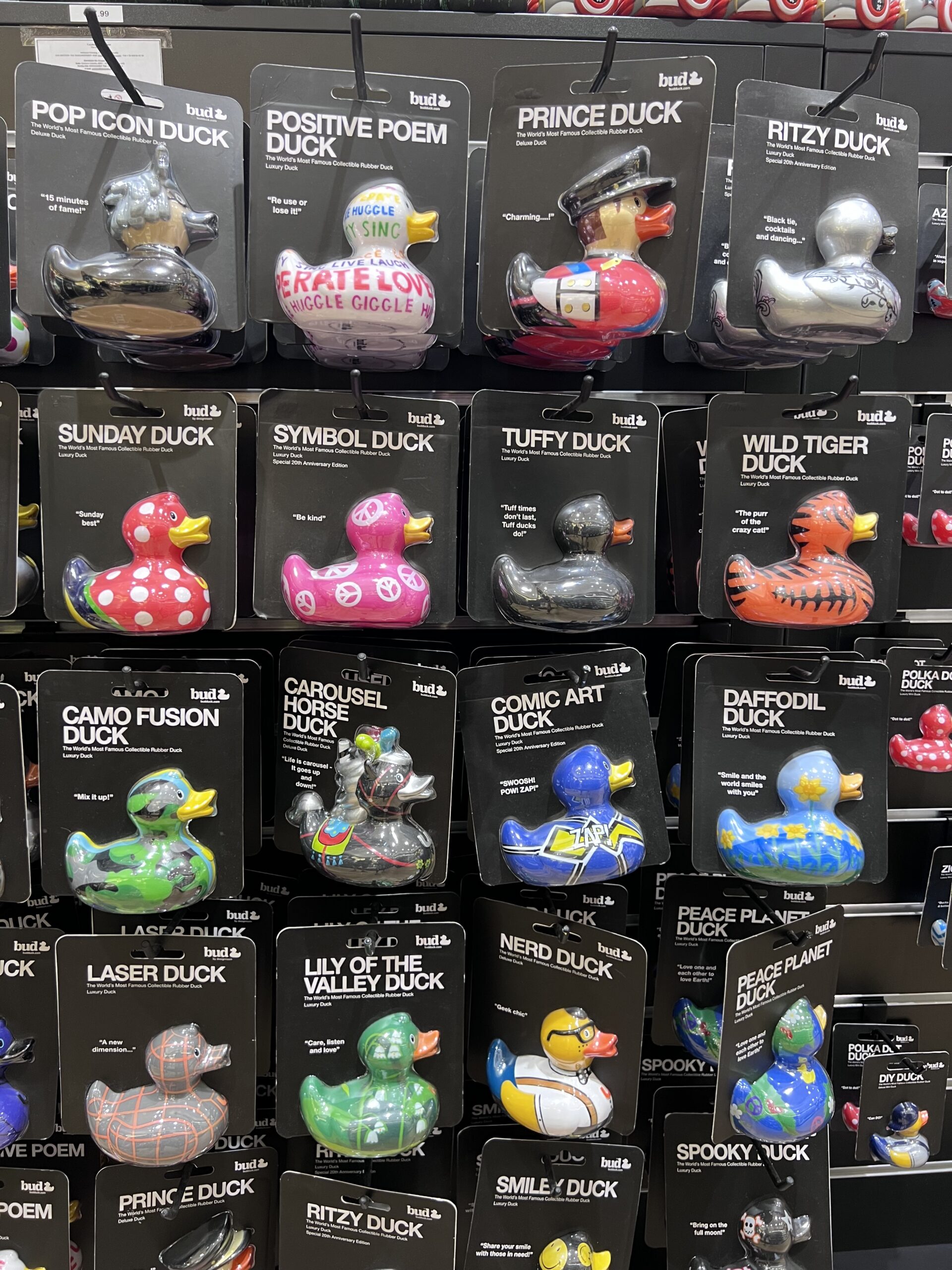
It wasn’t just a small section inside a toy store. Nor a shelf for funny objects or last-minute gifts. It was an entire shop, specializing in little ducks, with hundreds of versions inspired by historical figures, works of art, musicians, athletes, heroes, villains, and symbols of Italian culture. Some were clearly designed for tourists. Others seemed to be made for more attentive collectors, interested precisely in the less obvious versions.
The colorful walls and huge variety created a striking visual experience. It was hard to walk in without immediately searching for the weirdest, funniest, or most personally meaningful duck.
At that moment, I remembered the little ducks on Jeep dashboards and left with a question that stayed with me for the rest of the trip: How did such a simple object, originally associated with children’s bath time, turn into a market capable of supporting specialty shops in different cities around the world? At that point, I realized my curiosity was no longer about rubber ducks. It was about people, communities, and brands.
Who really owns a brand?
For a long time, branding was treated as a process built predominantly from the inside out. The company studied the market, defined a positioning, created an identity, developed communications, and presented to the public the way it wanted to be perceived.
This work is still fundamental. A brand without strategic clarity, consistency, and recognizable codes will hardly build relevance. The problem is in thinking the process ends when communication reaches the consumer. In practice, that’s exactly when another part of the building process begins.
Grant McCracken, an anthropologist and one of the main scholars of the relationship between culture and consumption, published an important model in 1986 about the movement of cultural meanings. For him, meanings circulate between the cultural world, consumer goods, and people. They don’t remain stationary within a product or under the exclusive control of the company that created it. They are appropriated, interpreted, and transformed by those who use them. This means that a company can create a product and propose a meaning, but it doesn’t determine alone how it will be incorporated into people’s lives.
Douglas Holt develops a complementary reflection in How Brands Become Icons, published in 2004. By studying brands that achieved cultural relevance, Holt shows that they don’t become iconic just by repeating a message consistently. They gain strength when they represent issues, desires, tensions, and aspirations present in society, becoming symbolic resources people use to build and express their identities. In other words, strong brands don’t just live in manuals, campaigns, or at the point of sale. They live in how they are interpreted, incorporated, and shared.
Marty Neumeier summarized this change especially clearly by saying that a brand is not what the company says it is, but what people say it is. In his most recent model, the company goes even further: it creates products and relationships, but it’s the customers who build the brand through their choices, recommendations, and what it comes to mean in their lives.
It’s an uncomfortable idea for companies used to controlling every detail of communication. But it’s also one of the greatest opportunities in contemporary branding. The brand can be managed by the company. Its meaning, not completely.
The importance of belonging
Human beings have always looked for ways to show who they are and which groups they belong to. We do this through the clothes we wear, the places we go, the sports we play, the music we listen to, the brands we choose, and the objects we decide to display.
The monetary value of these objects isn’t always the most important thing. Often, what really matters is their symbolic value. A small plastic duck might cost very little and yet represent a meeting, a trip, a friendship, an achievement, or acceptance into a community. For those outside the group, it’s still just a toy. For those who belong to that culture, it carries a story.
Bernard Cova helps to explain this behavior through the concept of consumer tribes. Instead of focusing only on the individual relationship between a person and a product, Cova draws attention to the relationships that consumption helps build between people. In certain contexts, the value of connection provided by a product can be more important than its functional use. The object becomes a way to bring individuals together, create rituals, establish codes, and allow recognition among group members.
This explains why belonging is so powerful for brands. Functional benefits can be compared relatively easily. Price, performance, durability, technology, and convenience are usually side by side in any decision process. Emotional benefits, however, are much harder to build and, even more, to copy.
A brand that can make its consumers feel like they’ve found their group goes beyond a commercial relationship. It becomes part of their identity, their social relationships, and how they want to be seen.
This kind of connection takes time, consistency, and authenticity. It can’t be manufactured with just a good campaign. On the other hand, when it’s solidified, it creates levels of loyalty and advocacy that would hardly be reached through functional advantages alone. It was exactly this reflection that took me back to Jeeps and their little ducks.
A gesture of kindness that became a movement
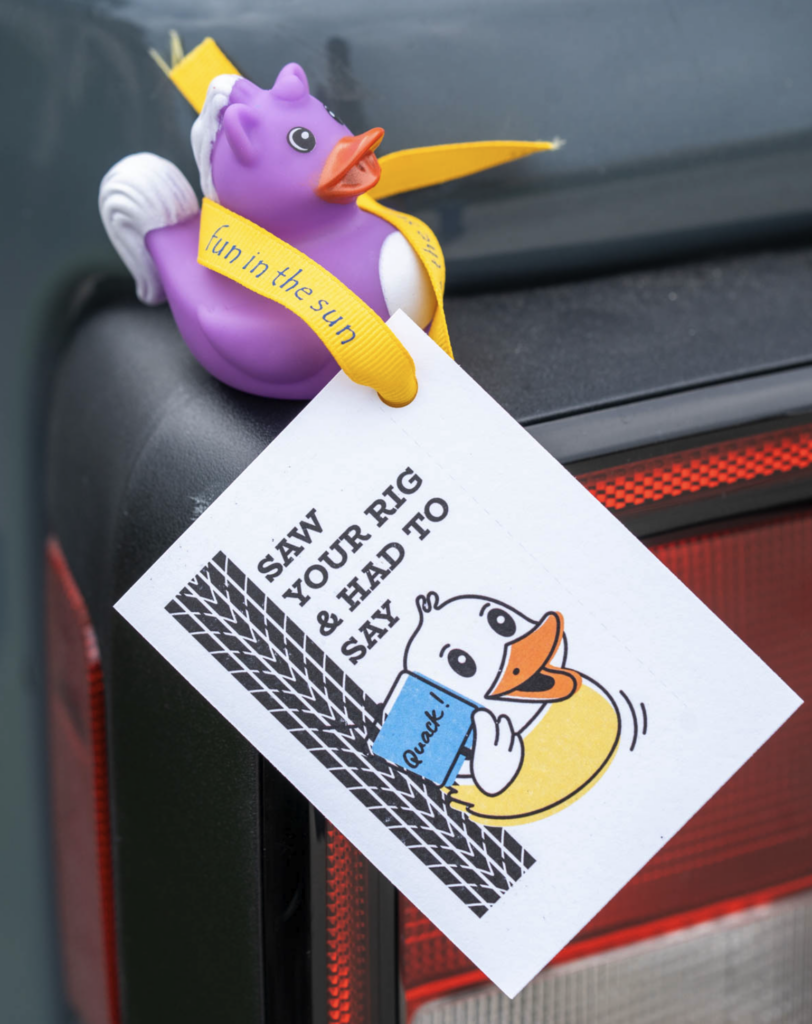
The phenomenon began in 2020, during the pandemic. Canadian Allison Parliament had gone through an unpleasant experience during a trip and decided to do a kind gesture. When she found another Jeep, she placed a small rubber duck on it along with a positive message.
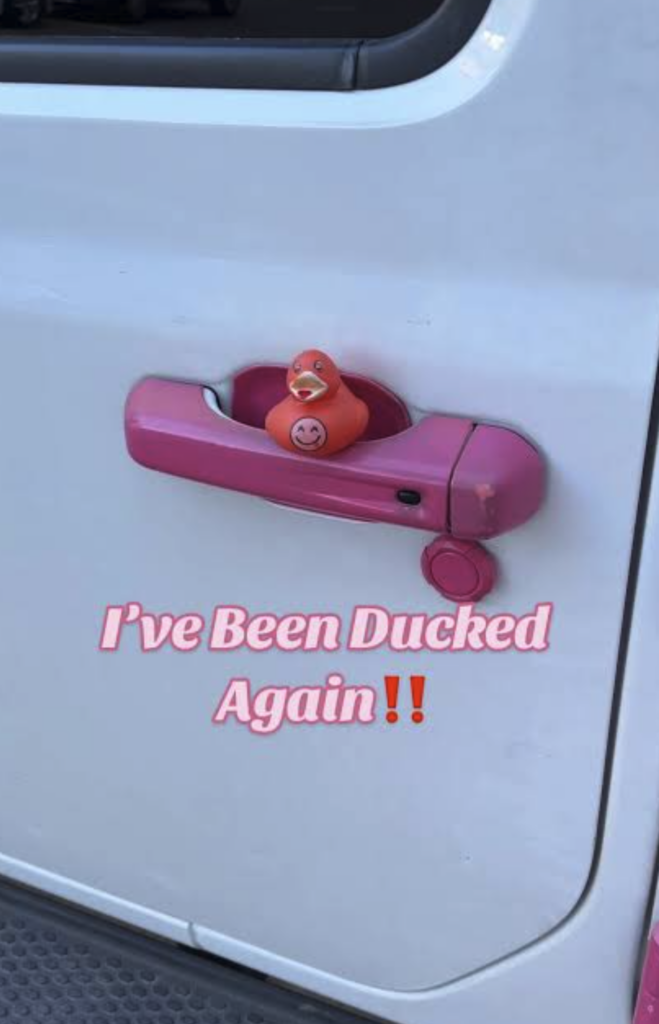
The person who received the duck liked the surprise. The story was shared; other owners began repeating the gesture and the game spread across social media. Thus was born the movement known as Duck Duck Jeep or simply Jeep Ducking.
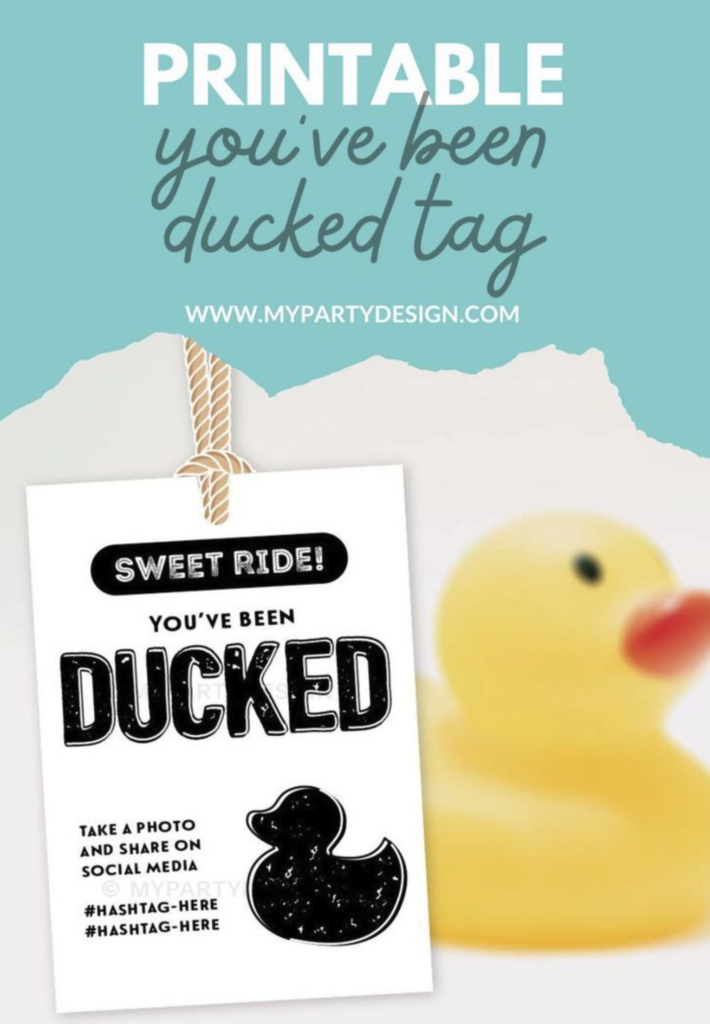
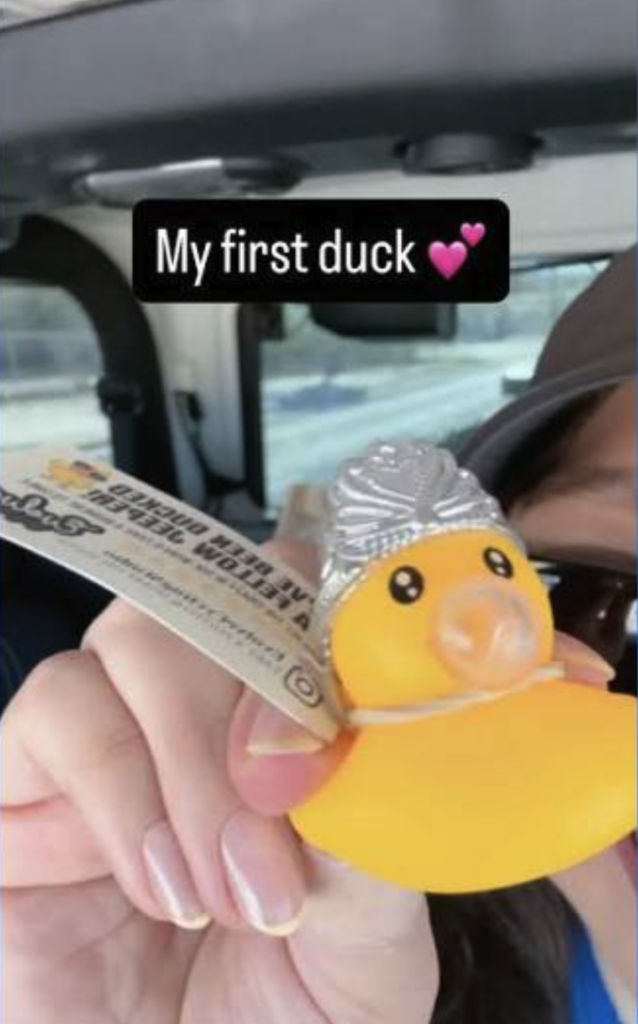
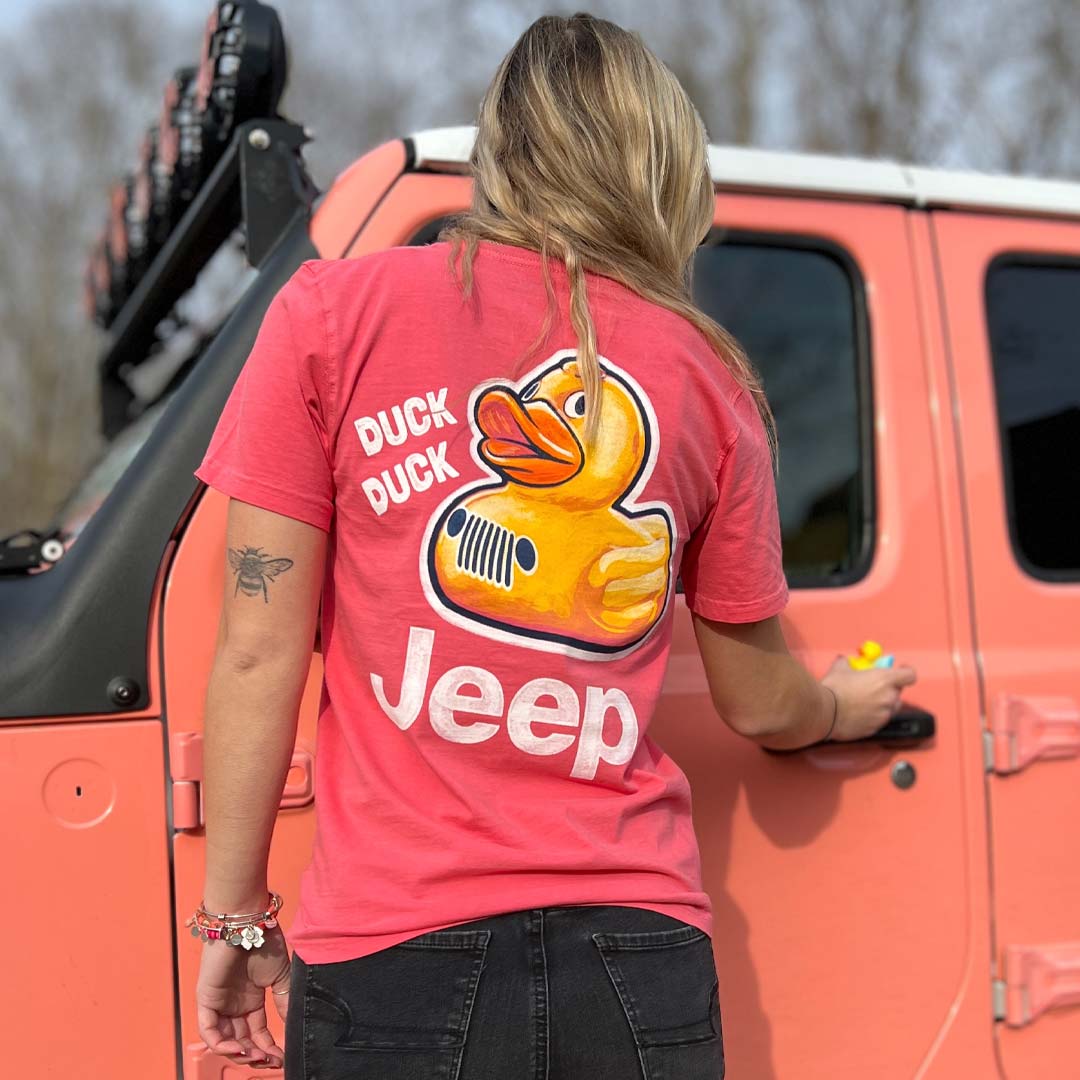
The dynamic is simple. An owner finds a Jeep they like, leaves a duck on the vehicle, often along with a message, and invites the other driver to keep the chain going. The duck is at once a gift, a recognition, and a sign of belonging. Whoever receives it can keep it, put it on their dashboard, or use it to gift another owner. What started as an isolated gesture became a ritual shared by Jeep communities in several countries.
The most interesting thing is that Jeep didn’t create the idea. The movement was born outside the organization, from a personal experience and a consumer’s desire to brighten someone else’s day. This is a nearly textbook case of outside-in branding. Consumers created a new cultural code for the brand. The company then had to decide what to do with it.
Why Jeep, specifically?
It’s possible to imagine the same behavior with other car brands. A driver could leave a gift on a Ford, a Toyota, or a Honda. However, it’s unlikely that a single gesture would find, in all those brands, the same conditions to so quickly become a global movement. The duck didn’t create the Jeep community. It found a community that already existed.
Over the decades, Jeep has built a very strong association with adventure, freedom, nature, exploration, toughness, and camaraderie. Its military history, instantly recognizable look, off-road capability, and connection with trails and outdoor activities have helped shape a culture that goes beyond the product.
The brand itself presents freedom and capability as central elements of its identity, maintaining a history of over eight decades associated with 4×4 vehicles. Here, I highlight the importance for brands to clearly identify and define their territories, personas, and behavioral traits to maintain narrative coherence over the years.
In addition, there’s a broader off-roading culture that isn’t limited to Jeep. Owners of off-road vehicles from different manufacturers often participate in trail rides, meetups, clubs, and expeditions. Suzuki, Ford, Land Rover, Toyota, and other brands also benefit from this group spirit.
Jeep, however, managed to combine the general off-roader culture with particularly strong proprietary codes. The Wrangler’s design, the front grille, removable doors, open roof, and the brand’s visual language make the vehicle almost a lifestyle statement. Even when the car never goes off-road, it still communicates the possibility of adventure.
This is an important point. Brand communities aren’t built just through purchase frequency or product satisfaction. They arise when people recognize shared values, behaviors, and aspirations in one another. The duck was able to spread because there was already a tribe ready to welcome it.
When the community expands the brand
Jeep could have ignored the phenomenon. It also could have tried to control it, trademark it quickly, or present itself as the creator of the tradition. Instead, it began to recognize and celebrate the practice developed by owners.
As the movement grew, the company incorporated the ducks into its official channels, licensed products, and promotional activities. Today, the official Jeep Gear store has a collection dedicated to ducking, while the brand itself uses collectible ducks to offer clues and celebrate the launch of special vehicle editions.
There is, of course, commercial capitalization. The brand saw the phenomenon’s potential and started turning it into content, products, and experiences. However, the most relevant aspect isn’t the sale of official ducks. It’s how Jeep legitimized a consumer-created behavior without trying to erase its origin.
This distinction is fundamental. The company didn’t define the ritual and then invite the public to participate. First, the public created the ritual. Then the company recognized that this spontaneous manifestation reinforced the same values of community, friendship, and belonging that were already part of its universe.
Brands need to have the humility to recognize that not all good ideas will be born in their offices. Sometimes, the smartest role is not to lead, but to observe, understand, and amplify.
Collection, scarcity, and status
As the movement grew, the duck stopped being just a record of a kind gesture. It also became a collectible item. And every collection develops its own hierarchies.
Having one duck is different from having fifty. Having fifty common models is different from owning a hard-to-find edition. A duck received from a stranger may have a different meaning from one bought during a trip. An exclusive model from a city, event, or community can reach a value far higher than its original price. In this way, a particular form of status arises.
It’s not necessarily about displaying wealth. What’s at stake is the ability to gather stories, rarities, and signs of involvement with that culture. The status is recognized internally by the group, even if it’s practically invisible to outsiders.
The Jeep dashboard works as a showcase of this journey. Each duck adds information. The quantity shows participation. The variety reveals dedication. The exclusive editions suggest trips, meetups, or deeper knowledge about that culture.
It’s the same mechanism found in many other consumer phenomena. Disney pins, Crocs Jibbitz, Funko Pop characters, limited-edition sneakers, Sonny Angels, Labubu, and so many other categories use variation, scarcity, and collectibility to turn small objects into systems of identity and differentiation.
The individual product may be relatively cheap. The complete collection, however, represents time, knowledge, access, and emotional involvement. The consumer isn’t just buying another unit. They’re expanding a narrative about themselves.
When culture creates a market
That’s what I found in that shop in Rome. Today, there are chains and specialty stores for rubber ducks in different European cities. Original Duck Stores claims to have operated since 2015 as a European network dedicated to the category. The Amsterdam Duck Store lists locations or affiliated operations in cities like Amsterdam, Barcelona, Paris, Rome, Madrid, Milan, Venice, Porto, Brussels, and other places. The Rome Duck Store sells hundreds of models and develops exclusive versions inspired by Rome and Italian culture.
The phenomenon has also reached American retail. In San Francisco, for example, Kwak—a store specializing in rubber ducks at Pier 39—turned the category into a tourist attraction and retail experience. It’s important to note that these stores don’t depend exclusively on Jeep owners. The rubber duck already had a long presence in popular culture, childhood, humor, art, and tourism. The connection with Jeeps, however, added a new layer of meaning, expanded the interest in collectible versions, and showed how a simple object can be appropriated by different communities.
What brands can learn
As I left the shop in Rome, without my duck and with no Jeep to put it on, I carried with me a reflection much more valuable than a souvenir.
Even by investing in strategy, research, positioning, design, and communication, no company fully controls the meaning of its brand. The organization’s job is to build a clear and coherent foundation, create relevant products, establish recognizable codes, and deliver experiences capable of supporting what it promises. Strategic branding work is and will remain essential. However, when it goes out into the world and impacts people, it’s necessary to keep watching what they do with that construction.
What stories do people start to tell? What rituals appear spontaneously? What products get customized? What symbols start being displayed? What kinds of communities emerge? What unexpected uses begin to repeat?
Not every cultural appropriation will be positive or consistent with the strategy. In some cases, the company will need to set limits. In others, it will find fleeting behaviors that aren’t strong enough to justify any movement. But some manifestations reveal a true connection. When that happens, the brand should resist the urge to control immediately. Before turning the behavior into a campaign, it’s important to understand why it emerged and what human need it meets. In the case of the ducks, there’s humor, kindness, recognition, collection, exclusivity, status, and belonging. The object is simple, but the needs it mobilizes are profound.
Some time ago, I wrote that branding is a gerund because it’s a continuous movement that doesn’t stop when the strategy is launched. It depends on daily execution to become real. Looking at the case of the ducks, I’m even more sure of this: the role of brand managers isn’t to exercise control, but to stimulate connections. A brand becomes a Love Brand when it stops depending only on what the company says. When consumers begin to create their own stories, codes, and rituals, the brand occupies a deeper place in culture. The more closely brands are connected to people’s needs, moments, frustrations, desires, and dreams, the clearer companies will be about how to build unique, authentic, and lasting relationships.
This is the highest point of maturity in brand management.